
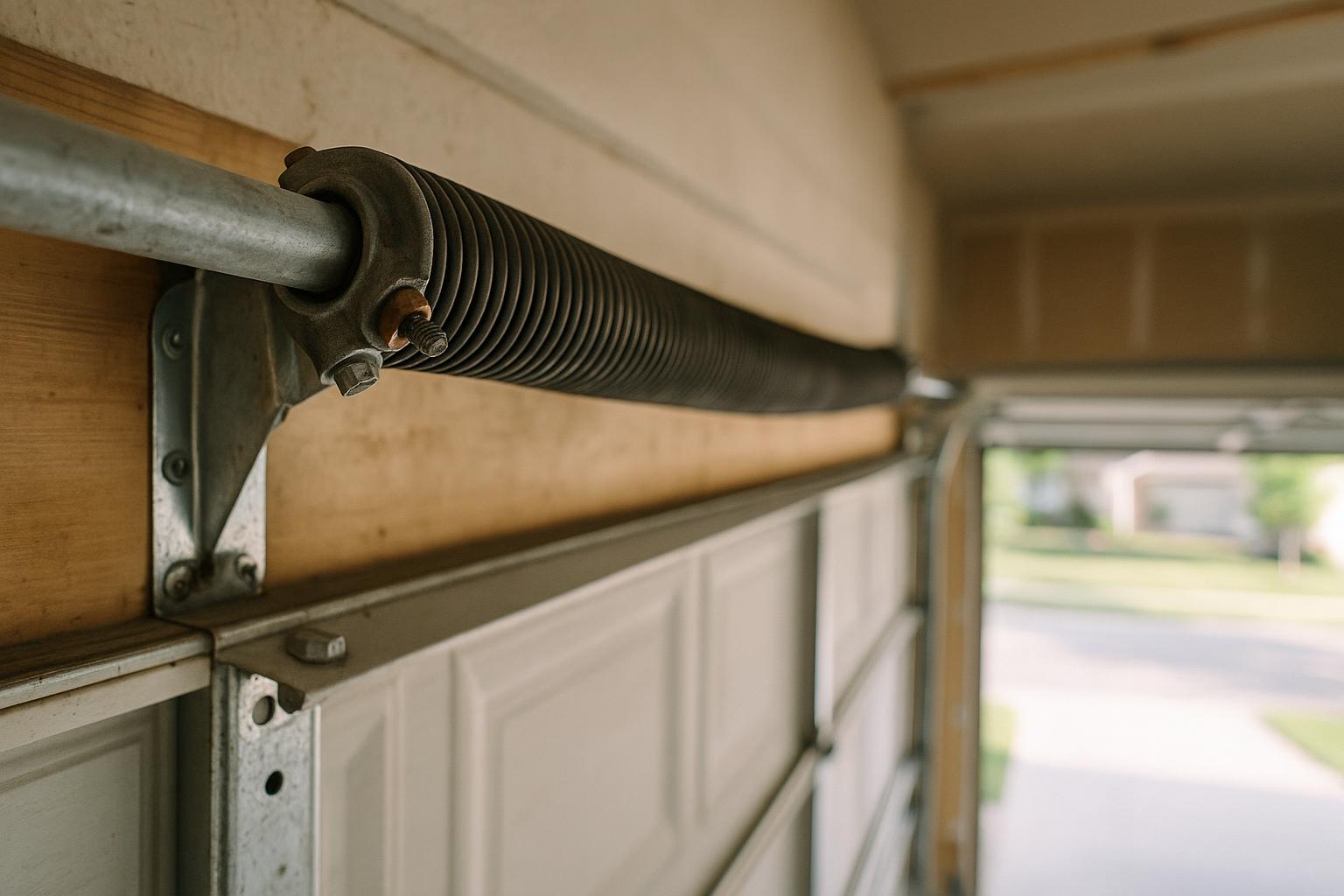
Your Garage Door Springs Are Doing More Work Than You Think
Every time you open and close your garage door, the springs are doing the heavy lifting — literally. A standard two-car garage door can weigh between 150 and 250 pounds, and without properly functioning springs, your opener alone can't handle that load. Springs are under enormous tension, and over time, they wear out. For homeowners in Moore, where we use our garages daily through scorching summers and icy winters, understanding when to replace your springs can save you from an unexpected — and potentially dangerous — failure.
At Moore Garage Door Co, spring replacement is one of the most common service calls we get. Let's walk through everything you need to know about garage door spring lifespan, warning signs, and replacement.
How Long Do Garage Door Springs Last?
Garage door springs are rated by cycle life. One cycle equals one full open and one full close. Most standard torsion springs are rated for approximately 10,000 cycles, which translates to roughly 7 to 10 years of normal use for the average household.
However, several factors can shorten or extend that lifespan:
- Frequency of use: If you use your garage door four or more times a day (common for busy families), your springs will wear out faster than someone who only opens the door twice daily.
- Climate and temperature swings: Here in central Oklahoma, we experience wide temperature fluctuations. Metal expands and contracts with heat and cold, which adds stress to springs over time.
- Maintenance habits: Springs that are regularly lubricated and inspected tend to last longer than those that are neglected.
- Spring quality: Not all springs are created equal. Higher-cycle springs (rated for 20,000 or even 30,000 cycles) are available and may be worth the investment if you want longer intervals between replacements.
Torsion Springs vs. Extension Springs: What's the Difference?
Before we go further, it helps to understand the two main types of garage door springs:
Torsion Springs
These are mounted on a metal shaft directly above the garage door opening. They use torque — a twisting force — to lift the door. Torsion springs are the more common and generally preferred option for modern garage doors because they provide smoother, more balanced operation.
Extension Springs
These are mounted on either side of the door and stretch to store energy. Extension springs are typically found on older or lighter garage doors. They tend to wear out faster and can be more dangerous when they break because they're under stretching tension rather than contained torsion.
If your home in Moore or the surrounding areas like Norman or Oklahoma City still has extension springs, you may want to consider upgrading to torsion springs during your next replacement for improved safety and longevity.
Warning Signs Your Garage Door Springs Are Wearing Out
Springs rarely fail without giving you some advance warning. Here are the key signs to watch for:
1. The Door Feels Heavier Than Usual
Try disconnecting your opener by pulling the emergency release handle, then manually lift the door. A properly balanced door with healthy springs should feel relatively light and stay open on its own about three to four feet off the ground. If the door feels extremely heavy or slams shut when you let go, your springs are losing tension.
2. The Door Opens Unevenly or Crooked
If one spring is weaker than the other (or if one has already broken), the door may rise unevenly, with one side higher than the other. This puts extra strain on your opener, tracks, and cables.
3. Visible Gaps in the Spring Coils
A healthy torsion spring has tightly wound coils with no visible gaps. If you notice a gap — even a small one — in the middle of the spring, it has likely already broken and needs immediate replacement.
4. Loud Bang from the Garage
Many homeowners in Moore have told us they heard a loud bang coming from the garage, almost like a gunshot. That sound is often a spring snapping. If this happens, do not attempt to operate the door. A broken spring means the full weight of the door is unsupported.
5. The Opener Struggles or Stops Working
Your garage door opener is designed to work with the springs, not replace them. If the opener is straining, making grinding noises, or stopping partway through the cycle, failing springs could be the root cause.
6. The Door Won't Stay Open
If your garage door slowly creeps down after you open it, the springs no longer have enough force to counterbalance the door's weight. This is both an inconvenience and a safety hazard.
Can You Replace Garage Door Springs Yourself?
We understand the DIY spirit — it's strong here in Oklahoma. But garage door spring replacement is one job we strongly recommend leaving to professionals. Here's why:
- Extreme tension: Torsion springs are wound under tremendous force. A spring that releases unexpectedly can cause serious injury or even death.
- Specialized tools required: Proper replacement requires winding bars, clamps, and precise measurements. Using the wrong tools or techniques is dangerous.
- Balancing matters: Springs need to be calibrated to the exact weight of your specific door. An improperly balanced door will wear out your opener prematurely and operate unsafely.
Our technicians at Moore Garage Door Co handle spring replacements every week. We have the training, tools, and experience to get it done safely and correctly — usually in under an hour.
Should You Replace Both Springs at Once?
If one spring breaks, we almost always recommend replacing both springs at the same time. Here's the reasoning: if one spring has reached the end of its lifespan, the other one is likely not far behind. Replacing both at once saves you from paying for a second service call in a few weeks or months, and it ensures your door is evenly balanced from the start.
How to Extend the Life of Your Garage Door Springs
While springs will eventually wear out no matter what, regular maintenance can help you get the most out of them:
- Lubricate your springs every six months with a silicone-based garage door lubricant. This reduces friction and prevents rust.
- Schedule annual maintenance inspections. A professional can spot early signs of wear before a spring fails unexpectedly.
- Invest in high-cycle springs during your next replacement. They cost a bit more upfront but can last two to three times longer.
- Keep your door balanced. If you notice any of the warning signs above, address them promptly rather than waiting for a complete failure.
When to Call Moore Garage Door Co
If you're noticing any of the warning signs we've discussed — or if it's simply been 7 to 10 years since your last spring replacement — it's time to have them inspected. We serve homeowners and businesses throughout Moore, Norman, Midwest City, Del City, Newcastle, and the greater Oklahoma City area with fast, honest service.
Whether you need an emergency replacement after a spring snaps at 6 AM or you want to proactively upgrade to longer-lasting springs, our team is ready to help. We show up on time, explain your options clearly, and never push services you don't need.
Contact Moore Garage Door Co today to schedule a spring inspection or replacement. A little attention now can prevent a major headache — and a major repair bill — down the road.