
That Noise Isn't Normal — And It's Trying to Tell You Something
You press the button on your garage door opener and instead of a smooth, quiet operation, you're greeted with grinding, squealing, popping, or rattling. If your garage door has started making strange noises, you're not alone. It's one of the most common complaints we hear from homeowners in Moore, and it's almost always a sign that something needs attention.
The good news is that most noisy garage door problems are fixable — and catching them early can save you from a much bigger (and more expensive) repair down the road. Let's walk through the most common causes of a noisy garage door and what you should do about each one.
1. Worn or Dry Rollers
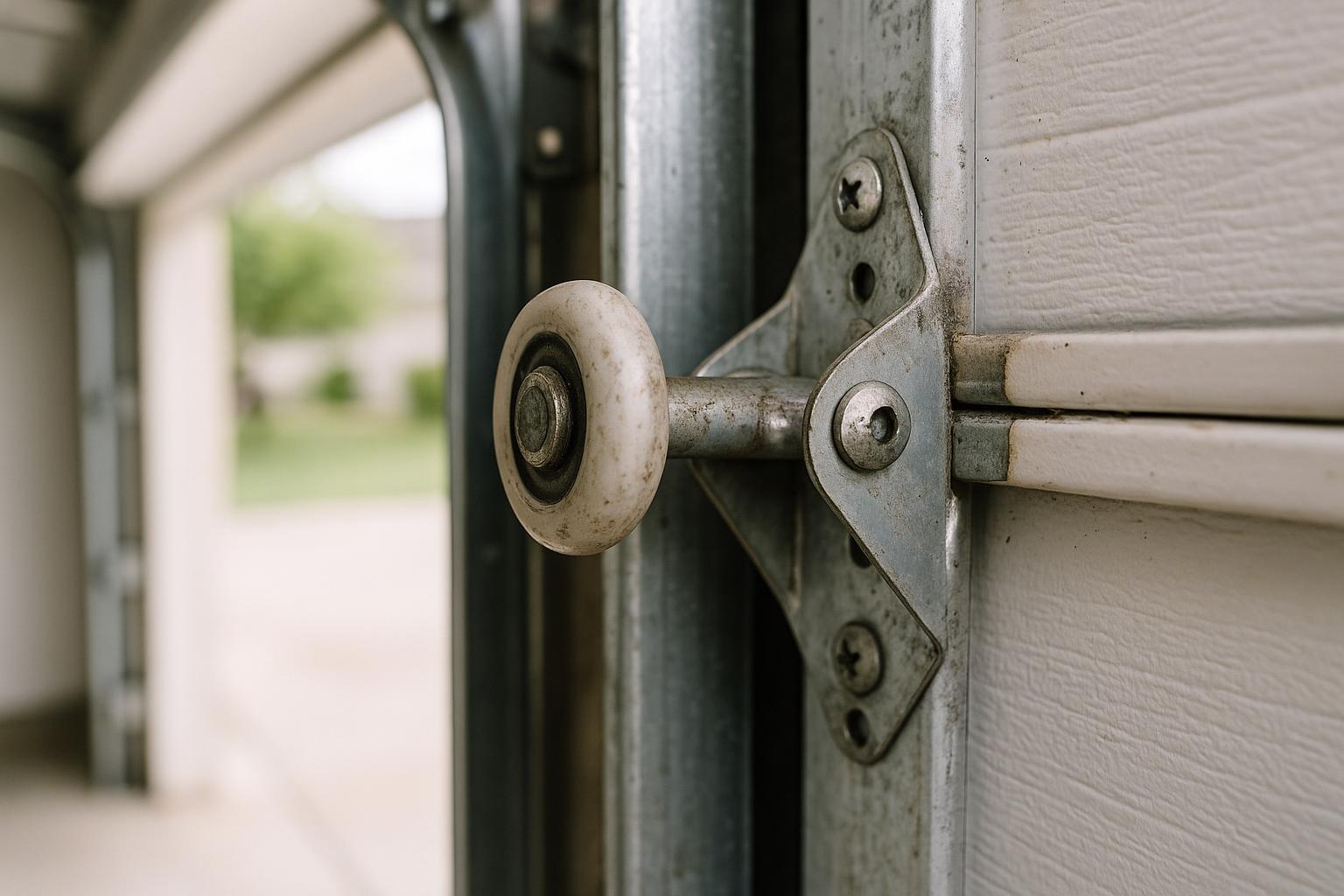
Garage door rollers are small wheels that guide the door along the tracks as it opens and closes. Over time, these rollers wear down, develop flat spots, or simply dry out. When that happens, you'll typically hear a grinding or squealing noise every time the door moves.
Metal rollers are the most common culprits. They're durable but tend to get noisy as they age. If your rollers haven't been lubricated in a while, a good application of garage door lubricant (not WD-40 — more on that later) can quiet things down. However, if the rollers are visibly worn, cracked, or chipped, they'll need to be replaced.
Pro tip: Nylon rollers are significantly quieter than metal ones and don't require as much maintenance. If noise is a recurring issue, upgrading to nylon rollers is one of the best investments you can make.
2. Loose Hardware
Your garage door goes up and down hundreds of times a year. All that movement creates vibration, and vibration loosens hardware over time. Loose nuts, bolts, and brackets can cause rattling and banging sounds that echo through your garage — and sometimes through your entire house.
Grab a socket wrench and check all the bolts on your door's hinges, brackets, and track supports. Tighten anything that's loose, but be careful not to overtighten, as that can strip the holes or warp the brackets. If you notice any hardware that's damaged or missing, it should be replaced promptly.
3. Unlubricated Moving Parts
A garage door has a lot of moving parts — rollers, hinges, springs, and the opener chain or screw drive. When these parts aren't properly lubricated, metal rubs against metal, creating friction and noise.
We recommend lubricating your garage door's moving parts at least twice a year. Use a silicone-based garage door lubricant or white lithium grease. Apply it to the rollers, hinges, spring coils, and the opener's chain or screw.
A word of caution: Many homeowners reach for WD-40 when they hear a squeak. While WD-40 is great for loosening stuck parts, it's a solvent and not a long-term lubricant. It can actually strip away existing lubrication and leave parts drier than before. Stick with a product specifically designed for garage doors.
4. Worn or Unbalanced Springs
If you're hearing a loud banging or popping sound, especially when the door starts to move, your springs may be the issue. Torsion springs and extension springs bear the full weight of your garage door, and as they age, they can lose tension or develop weak spots that cause sudden, jarring noises.
An unbalanced door — one that's heavier on one side or doesn't stay in place when you lift it halfway — is a strong indicator that your springs are struggling. This is not a DIY fix. Garage door springs are under extreme tension and can cause serious injury if handled improperly. If you suspect a spring issue, call a professional right away.
5. Misaligned or Damaged Tracks
The metal tracks on either side of your garage door need to be properly aligned for smooth, quiet operation. If a track gets bumped, bent, or shifts out of alignment, the door can scrape, grind, or make a rubbing noise as it moves.
Visually inspect your tracks for any obvious bends, gaps between the track and the rollers, or debris that might be blocking the path. Minor alignment issues can sometimes be corrected by loosening the track brackets, gently tapping the track back into position, and retightening. For significant damage or persistent misalignment, professional repair is the safest route.
6. A Noisy Garage Door Opener
Sometimes the door itself is fine, but the opener is the source of the racket. Chain-drive openers are the most common type and also the loudest. The metal chain that pulls the door can rattle and vibrate, especially as it ages and stretches.
If your chain-drive opener has become unbearably loud, you have a couple of options. First, check the chain tension — a loose chain will slap around and create more noise. Your owner's manual should have instructions for adjusting it. Second, consider upgrading to a belt-drive opener, which uses a rubber belt instead of a chain and operates much more quietly. This is a popular upgrade for homeowners in Moore whose bedrooms are located above or next to the garage.
7. Worn Weatherstripping or Bottom Seal
This one is easy to overlook. The rubber seal along the bottom of your garage door can harden, crack, or come loose over time. When it does, you may hear a slapping or flapping noise when the door closes. While this isn't a mechanical problem, it's worth addressing because that seal also keeps out rain, dust, insects, and cold air — all things Oklahoma weather throws at us regularly.
Replacing a bottom seal is a relatively simple and inexpensive fix that can make your garage quieter and more energy-efficient.
When to Call a Professional
Some noisy garage door issues are easy to handle on your own — tightening a few bolts, applying lubricant, or replacing a worn weatherstrip. But other problems, especially those involving springs, cables, tracks, or the opener mechanism, require professional expertise and specialized tools.
If you've tried the basic fixes and your garage door is still making noise, or if the sounds are getting louder or more frequent, it's time to have it inspected. Ignoring the problem rarely makes it go away and often leads to a more costly repair.
Keep Your Garage Door Running Quietly in Moore
A noisy garage door is more than just an annoyance — it's a warning sign. Whether it's a simple lubrication issue or a sign of worn-out components, addressing the problem early keeps your door operating safely and extends its lifespan.
At Moore Garage Door Co, we help homeowners throughout Moore, Norman, Oklahoma City, and the surrounding communities diagnose and fix noisy garage doors every day. If your door is making sounds it shouldn't, give us a call. We'll show up on time, figure out what's going on, and get it running smoothly again.