
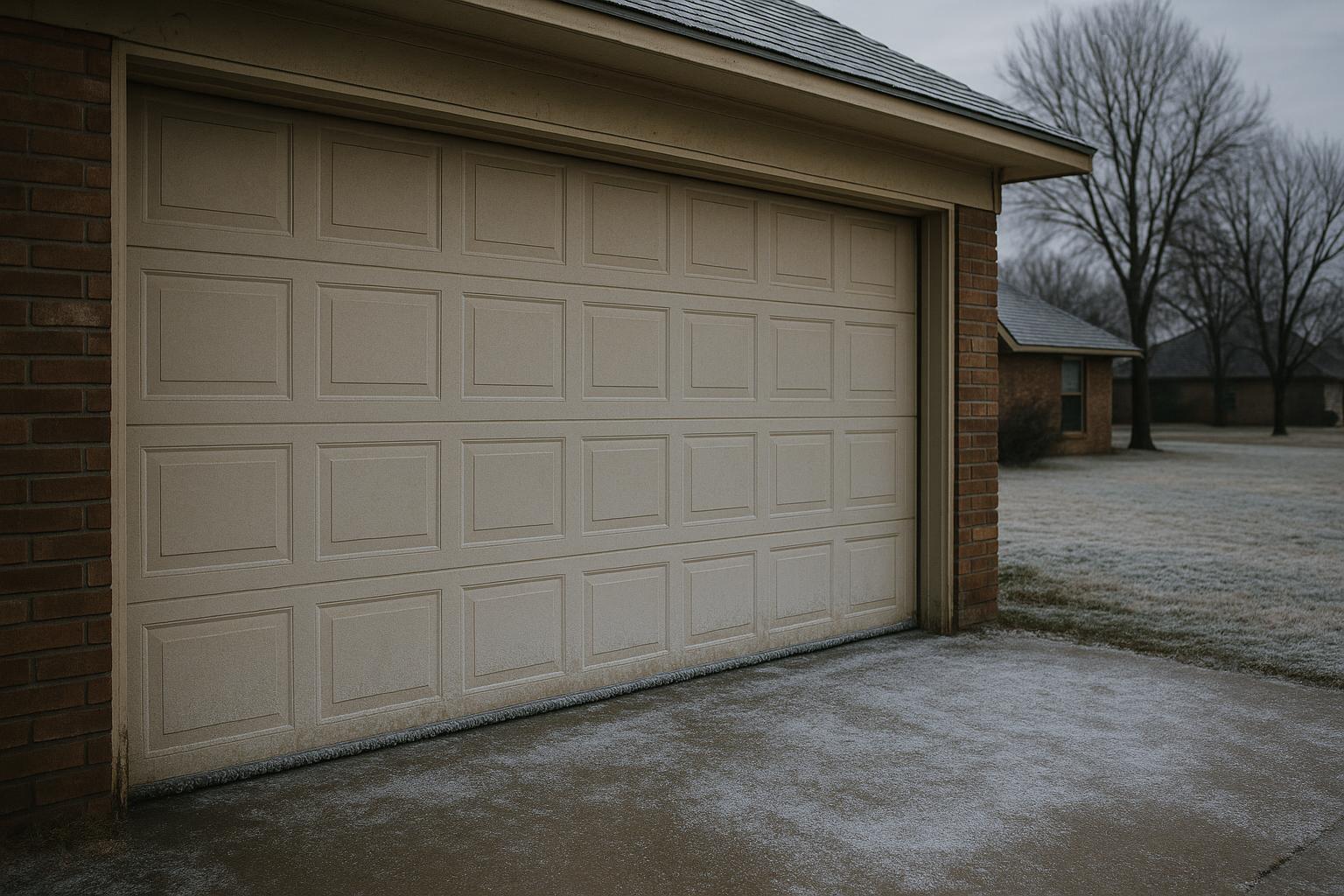
Winter Weather Can Wreak Havoc on Your Garage Door
Oklahoma winters might not be as brutal as what you'd find up north, but Moore still gets its share of freezing temperatures, ice storms, and sudden cold snaps. And when the temperature drops, your garage door is one of the first things to let you know about it.
If you've ever walked out on a frigid morning, hit the button on your garage door opener, and heard the motor strain without the door budging, you know how frustrating it can be. A garage door that won't open in winter isn't just an inconvenience — it can make you late for work, leave your vehicle exposed to the elements, or even create a safety hazard.
The good news is that most cold-weather garage door problems have straightforward causes and solutions. Let's walk through the most common winter issues and what you can do about them.
The Weatherstripping Is Frozen to the Ground
This is the number one reason garage doors refuse to open during winter. The rubber weatherstripping along the bottom of your door is designed to create a seal that keeps out drafts, rain, and pests. But when temperatures dip below freezing and moisture is present, that seal can literally freeze to the concrete floor of your garage or driveway.
When your opener tries to lift the door, it's fighting against that frozen bond. In some cases, the motor will strain and give up. In others, the weatherstripping can tear right off the door.
How to Fix It
- Never force the door open. Repeatedly hitting the opener button can burn out the motor or damage the weatherstripping.
- Use a heat gun or hair dryer to gently melt the ice along the bottom seal. Work slowly from one side to the other.
- Pour warm (not boiling) water along the base of the door to loosen the ice. Boiling water can crack cold concrete or damage the seal.
- Once the door is free, dry the area thoroughly and apply a silicone-based lubricant to the weatherstripping to help prevent it from freezing again.
Metal Parts Contract in the Cold
Your garage door system is full of metal components — tracks, springs, hinges, and rollers. When temperatures drop significantly, metal contracts. This contraction can cause tracks to become slightly misaligned, springs to lose tension, and moving parts to bind or stick.
In Moore, where we can go from 50 degrees one day to 15 degrees the next, these rapid temperature swings put extra stress on your garage door hardware.
How to Fix It
- Apply a garage door-specific lubricant to all moving parts, including the springs, hinges, rollers, and tracks. Avoid WD-40, which can actually attract dust and grime. Use a silicone or lithium-based spray instead.
- Visually inspect the tracks for any gaps or misalignment. If the door seems to catch or drag at a certain point, the track may have shifted.
- If your springs feel weak or the door seems heavier than usual, don't try to adjust them yourself. Garage door springs are under extreme tension and should only be handled by a professional.
Your Garage Door Opener Loses Power or Sensitivity
Cold weather can affect your garage door opener in a couple of ways. First, if you've had a winter ice storm — something we're no stranger to here in central Oklahoma — power outages can reset your opener's settings. Second, the cold can cause the lubricant inside the motor to thicken, making it work harder than usual.
Some openers also have a force setting that determines how hard the motor pushes to open or close the door. If the door is slightly harder to move due to cold-weather contraction, the opener might interpret that extra resistance as an obstruction and stop.
How to Fix It
- Check that the opener is plugged in and receiving power. After a storm, a tripped breaker is often the culprit.
- Consult your owner's manual to locate the force adjustment settings. A small increase might be all you need, but be careful — setting the force too high can be dangerous.
- If the motor sounds sluggish or strained, it may need professional servicing. Older openers especially struggle in cold weather.
The Remote or Keypad Isn't Responding
Before you assume the worst about your garage door, check the simple stuff. Cold weather drains batteries faster than warm weather. If your remote control or exterior keypad isn't responding, the batteries may simply be dead.
How to Fix It
- Replace the batteries in your remote and keypad. Keep spare batteries in your car during winter months.
- If new batteries don't solve the problem, try reprogramming the remote to the opener. Power surges from winter storms can sometimes disrupt the signal pairing.
- Clean the keypad buttons — ice and grime can prevent them from making proper contact.
Condensation and Moisture Cause Rust and Corrosion
Winter isn't just about cold — it's about moisture. Condensation builds up inside garages that aren't well insulated, and that moisture settles on metal components. Over time, this leads to rust on springs, hinges, and tracks. Rusty parts create friction, and friction makes your door harder to open and close.
How to Fix It
- Wipe down metal components periodically during winter and apply a rust-inhibiting lubricant.
- If your garage has poor ventilation or insulation, consider adding weatherstripping around the door frame and insulating the garage door itself. This helps regulate temperature and reduce condensation.
- If you notice significant rust on your springs or cables, call a professional. Corroded springs are weaker and more likely to snap without warning.
Preventive Maintenance Is the Best Winter Strategy
Most winter garage door problems are preventable. A professional maintenance visit before cold weather sets in can catch worn parts, lubricate everything properly, and make adjustments that keep your door operating smoothly all season long.
At Moore Garage Door Co, we recommend scheduling a maintenance appointment in late fall. During a typical visit, we'll inspect the springs, cables, rollers, tracks, weatherstripping, and opener to make sure everything is in good shape before the first freeze hits.
We also see a lot of emergency calls during winter from homeowners in Moore, Norman, and Oklahoma City who skipped routine maintenance. A little prevention goes a long way toward avoiding a stressful morning when your door won't budge and the wind chill is in the single digits.
When to Call a Professional
Some winter garage door issues are safe to troubleshoot on your own — replacing batteries, applying lubricant, or melting ice from the weatherstripping. But other problems require a trained technician:
- Springs that appear stretched, rusty, or broken
- Cables that are frayed or hanging loose
- A door that is visibly off-track
- An opener motor that smells like it's burning or makes grinding noises
- Any situation where the door feels dangerously heavy when you try to lift it manually
If you're dealing with any of these issues, don't risk injury or further damage. Moore Garage Door Co offers emergency garage door service throughout Moore and the surrounding communities, including Del City, Midwest City, and Newcastle. We'll get to you quickly and get your door working again safely.
Stay Warm and Keep Your Garage Door Moving
A garage door that won't open on a cold morning is more than an annoyance — it disrupts your entire day. But with a little preparation and the right maintenance, you can avoid most winter-related garage door problems entirely.
If your garage door is already giving you trouble this winter, or if you want to get ahead of the cold with a maintenance checkup, give Moore Garage Door Co a call. We're your neighbors, and we're here to help.