
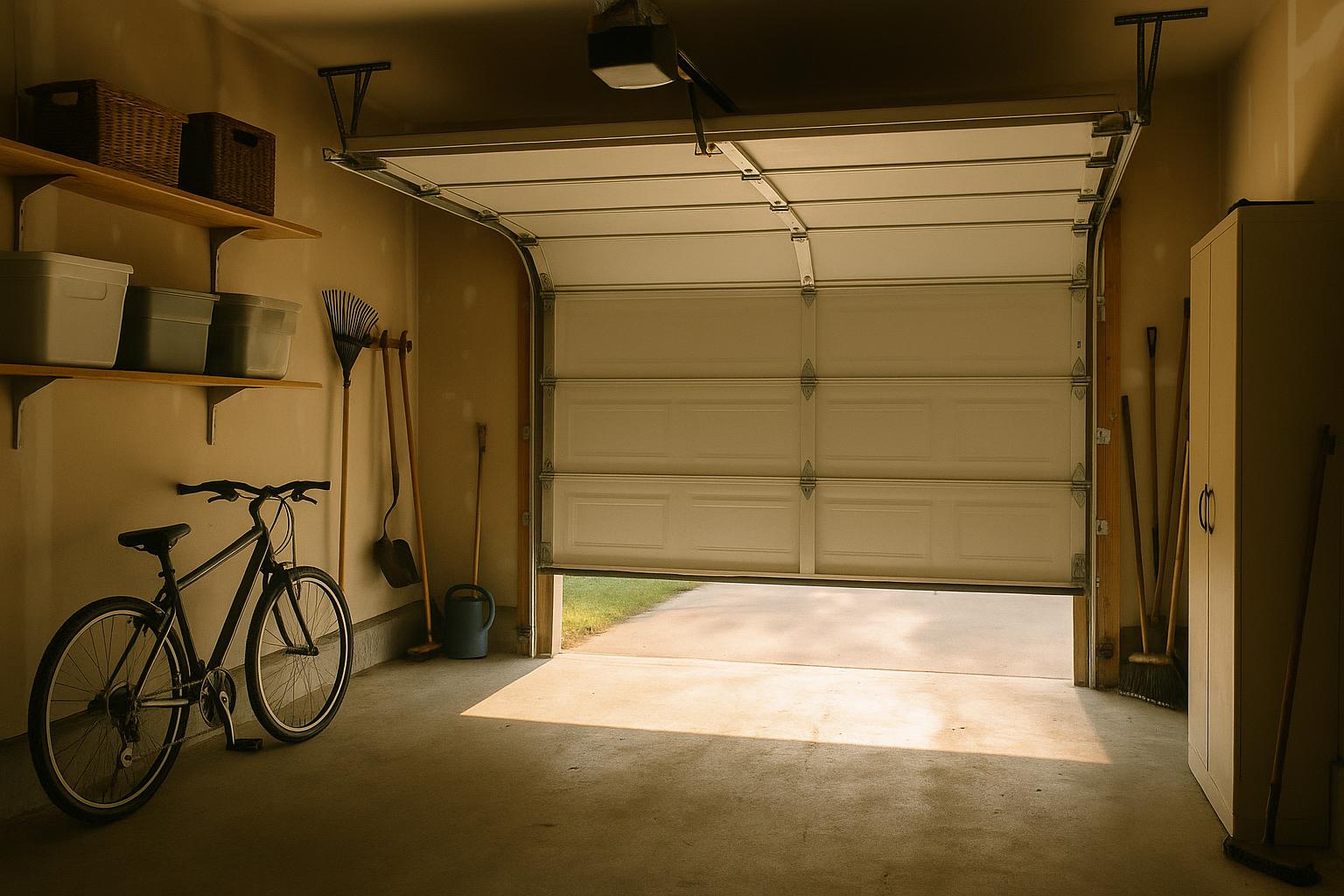
That Frustrating Moment When Your Garage Door Won't Stay Closed
You press the button on your remote, watch your garage door start its descent, and then — just before it reaches the floor — it reverses and goes right back up. You try again. Same thing. Maybe you try holding the wall button down, and it still won't cooperate.
This is one of the most common garage door complaints we hear from homeowners here in Moore, and it's more than just an annoyance. A garage door that won't fully close is a security risk, an energy waste, and an open invitation for pests, rain, and Oklahoma dust storms to make themselves at home in your garage.
The good news is that this problem usually has a straightforward explanation. Let's walk through the most common reasons your garage door reverses before hitting the floor and what you can do about each one.
1. Misaligned Safety Sensors
This is the number one cause of a garage door that reverses before closing, and it's often the easiest to fix. Every garage door opener manufactured after 1993 is required to have photo-eye safety sensors mounted near the bottom of the door tracks on each side. These sensors send an invisible beam across the opening. If something breaks that beam — a child, a pet, a trash can — the door automatically reverses to prevent injury or damage.
The problem is that these sensors can become misaligned over time. A bump from a bicycle tire, vibrations from the door's daily operation, or even settling of your garage foundation can knock them out of alignment. When the sensors can't "see" each other, the opener interprets it the same way it would interpret an obstruction: it reverses the door.
What to check:
- Look at the LED lights on each sensor. Most models show a steady green light on one sensor and a steady amber or green light on the other when properly aligned. A blinking light usually means misalignment.
- Gently adjust the sensor brackets until both lights are steady.
- Clean the sensor lenses with a soft cloth. Dust, cobwebs, and dirt can block the beam.
- Make sure no objects are partially blocking the sensor path.
2. Something Is Blocking the Door's Path
Before you start troubleshooting mechanical issues, take a careful look at the area where your garage door meets the floor. Sometimes the cause is surprisingly simple — a small rock, a piece of debris, a warped piece of weatherstripping, or even a slight buildup of ice in the winter months can prevent the door from closing fully and trigger the auto-reverse feature.
Clear the threshold completely and try again. You'd be surprised how often this solves the problem.
3. The Close-Limit Switch Needs Adjustment
Your garage door opener has a setting called the close-limit switch (sometimes called the travel limit or down-limit). This tells the opener how far the door needs to travel before it's considered fully closed. If this setting is off — even by a small amount — the opener may think the door has hit an obstruction when it's actually just reaching the floor.
When the opener senses more resistance than expected at the point it believes the door should stop, it reverses as a safety precaution.
What to check:
- Consult your opener's manual for instructions on adjusting the close-limit setting. Most units have a small dial or screw on the back or side of the motor housing.
- Make small adjustments — usually a quarter turn at a time — and test after each one.
- If you're not comfortable making this adjustment yourself, this is a quick fix for a professional technician.
4. Worn or Broken Springs
Your garage door springs do the heavy lifting — literally. They counterbalance the weight of the door so the opener doesn't have to work as hard. When springs wear out or break, the door becomes much heavier for the opener to manage. The opener may interpret this extra weight as an obstruction and reverse the door.
If you notice your door seems sluggish, makes loud straining noises, or if you can see a visible gap in one of the torsion springs above the door, spring failure is likely the culprit.
Important safety note: Garage door springs are under extreme tension and can cause serious injury if handled improperly. Spring replacement is not a DIY job. If you suspect a spring issue, call a professional. Our team at Moore Garage Door Co handles spring replacements regularly and can usually get your door working again the same day.
5. The Opener's Force Setting Is Too Low
In addition to the travel limit, your opener has a force setting that determines how much resistance the motor will push through before reversing. If this setting is too low, the door may reverse simply from the normal friction of the weatherstripping contacting the garage floor.
Like the close-limit switch, the force adjustment is typically a small dial on the opener unit. Increase it slightly, test the door, and repeat until the door closes fully without reversing. Be careful not to set the force too high, though — the auto-reverse feature exists to protect people and property, and you don't want to override that safety function.
6. Damaged or Worn Tracks and Rollers
Over time, the metal tracks that guide your garage door can become bent, dented, or clogged with debris. Rollers can wear flat, crack, or seize up. Any of these issues creates extra friction that the opener may interpret as an obstruction, triggering a reversal.
Signs of track or roller problems:
- The door moves unevenly or jerks during operation
- You hear grinding, scraping, or popping sounds
- Visible dents or bends in the track
- Rollers that appear cracked or don't spin freely
Minor track issues can sometimes be resolved by cleaning the tracks and applying a silicone-based lubricant. Bent tracks or worn rollers, however, should be repaired or replaced by a professional to avoid further damage to the door system.
7. Wiring Problems
Less common but still worth mentioning: damaged or frayed wiring between the opener, sensors, and wall control panel can send erratic signals that cause the door to behave unpredictably. Rodents chewing on wires is a surprisingly frequent issue in garages throughout Moore and the surrounding Oklahoma City metro area, especially as temperatures drop and critters look for shelter.
If you've checked everything else and the door still reverses, a wiring inspection may be in order.
When to Call a Professional
Some of these fixes — cleaning sensors, clearing debris, making minor adjustments — are well within the ability of most homeowners. But if you've worked through the basics and your door still won't close, or if the problem involves springs, tracks, or wiring, it's time to bring in a pro.
Garage doors are the largest moving component in most homes, and working on them without proper training and tools can be dangerous. There's no shame in calling for help — that's exactly what we're here for.
At Moore Garage Door Co, we diagnose and repair garage door reversal issues every week for homeowners across Moore, Norman, Oklahoma City, and the surrounding communities. We'll figure out what's causing the problem, explain your options clearly, and get your door working properly — usually in a single visit.
Don't Ignore a Door That Won't Close
A reversing garage door might seem like a minor inconvenience, but leaving it unaddressed can lead to bigger problems. An unsecured garage compromises your home's security, lets in moisture that can damage stored belongings, and forces your HVAC system to work harder if you have an attached garage.
If your garage door is giving you trouble, give us a call or schedule a service appointment. We'll get it sorted out so you can get back to pressing that button and walking away with confidence.